
Ginger up your summer drinking
A recipe for Ginger Beer

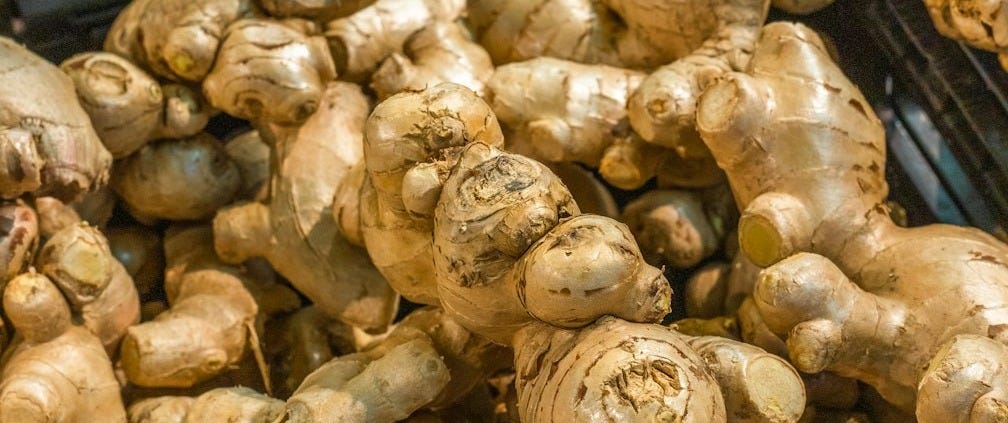
When we were young, my mother slaked the family thirst with home-made ginger beer. Yeast+sugar+ginger powder created a bubbling sludge which like us needed feeding daily, a third child on her roster, as it were, although its own nourishment was merely further spoonsful of the powder and the sugar. After a certain time, the khaki liquid was carefully drawn off the ginger ‘mother’ by our mother and a quantity of water, more sugar and freshly squeezed lemon juice added, then the whole decanted into bottles and left a while in the dark to get fizzy.
It was a recipe I repeated for my own small and thirsty children who lusted after the Coca-Colas in their sleepover group’s fridges which I wouldn’t buy them.
I’d forgotten all about it until my sister emailed me recently to ask if the ginger beer might not have been alcoholic. I was stunned. Was it? In those days, my sister and I were far too young to appreciate that when yeast and warm water come together with sugar, the liquid undergoes fermentation, sugar being converted into ethanol, a fancy name for alcohol, and carbon dioxide gas. But surely a parent would have known?
We certainly all knew about that gas. Frequent bangs signalled bottles of the ginger beer exploding in the kitchen cupboards.
I continued ginger beer fabrication for my children with unquestioning faith, in the same way that I followed my mother’s instructions on how best and most subtly to run a house, a basset hound, a husband. By then, I knew a smidgin or more about the ins and outs of how stuff was made. I was the Food Writer for a global news agency, for Pete’s sake. Yet with yeast in one spoon, sugar in another, I never ever reflected upon the scientific effect of each of ginger beer’s component parts upon the whole.
Still, looking back on it, I should have known. There was one day at the height of a steaming Washington DC summer when I came home parched from work, reached for the chilled bottle of ginger beer in the fridge, poured myself a tumbler, swigged it back then crashed into the kitchen counter. Shurely shome mishtake…
The internet tells me ginger beer made to my mother’s recipe is absolutely non-alcoholic. While I await what I hope will be your superior knowledge to set me straight one way or the other, I am not passing on the recipe because it would be ill-advised tell you how to make moonshine - if such it is. But I am myself going back to making my mother’s ginger beer again. It’s an incredibly refreshing summer drink and not the least expensive.
If you don’t make it with ginger powder and yeast but with a washed, unskinned ginger root, it’s a far superior drink, and non-alcoholic. The only yeast involved will be the wild yeast that exists on the skin of the unpeeled tuber, which is why you need one in prime condition. This natural yeast can’t ferment to alcohol levels much above 1 percent ABV (Alcohol By Volume, the standard global measurement used to state the amount of pure ethanol in an alcoholic drink).
Ginger is a member of the same family as turmeric, so if you’re going the root route (my apologies), you can readily add fresh turmeric to the ginger beer recipe for a health boost. However, use it with caution as spills will stain your gleaming white shirt yellow, should you favouring wearing one while doing any messing about in the kitchen.
Records of the existence of ginger come from an era we might all respect for the directness of its descriptive: the Warring States Period. Not 2026 as you might have assumed but China between 475BC and 221BC, the final centuries of the Zhou dynasty. Contemporary records include the information that Confucius, who was alive during a small part of that time, saw fit to eat ginger with every meal. He must have been aware somehow of its beneficial effects on upset stomachs, nausea, digestion, muscle soreness and more. It’s historic detail such as this that we need to be fed to comfort us with the confirmation that managing day-to-day living is not a recent challenge but has been one since time immemorial, and knowledge of the measures some have taken to cope with it might soothe and instruct us.
Easily grown in pots, in 406 BC records described ginger being transported on Chinese ships to prevent scurvy on long voyages. But by the later Song dynasty, the root was being exported back into China by countries which had begun to cultivate it with great success, countries like Sri Lanka. Then know as Ceylon, Sri Lanka had been on the Arab trade route, so naturally they introduced the spice into the Mediterranean region. It was promoted not as a foodstuff but as part of a range of herbal remedies that only the wealthy could afford. By the Middle Ages, however, it had evolved in society as a culinary ingredient. Still, only for the extremely rich: one pound of ginger in 14th century England cost as much as one sheep.
In 1495, the Danish-Norwegian ship Gribshunden sank off the southern coast of Sweden while transporting King Hans to a summit with the Swedish Council. This monarch was a significant collector of thrones - Denmark’s from 1482 to 1513 while simultaneously being the King of Norway as well as King of Sweden between 1497 and1501. Among the ship’s cargo of pricey luxuries and tributes were cloves, saffron, pepper, and ginger. It makes one wonder what constitutes the selection of luxury gifts conveyed in today's equivalents - those holds of private airliners ferrying from one summit to another our own ex- and current heads of state. On his visit to ex-President George W. Bush in 2003, Tony Blair gave him a sponge bag. While he, too, was no longer a premier and the bag was a £216 Tanner Krolle, which seems over the top for a sponge bag, it was still a sponge bag.
Sometime in the 16th century, with the covert support of the Spanish Crown, ginger plants were smuggled from Asia to Jamaica and neighbouring Caribbean islands, along with black pepper, cinnamon and cloves. Initially, only the ginger thrived, becoming, by the end of the century, the leading export crop growing on Puerto Rico and Hispaniola, an island located between Puerto Rico and Cuba, until slave labour introduced from Africa made sugar more profitable.
These days, fuelled by culinary and wellness trends, global trade in ginger is worth $5.51 billion annually. Prime exporters are China, India and, in the organic market, Peru.
The leading importer globally is the US and in Europe, the Netherlands.
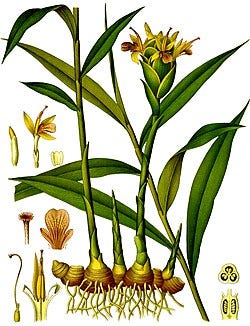
If you buy a tiptop fresh root, pearly in sheen and not wrinkled, with visible ‘eyes’ or buds, you can grow your own crop. Just soak it overnight in a bowl then plant it 2.5cm/1 in deep in potting soil. Keep it moist with light sprays in a warm, partly-shaded spot and wait for it to sprout. Leafy stems will emerge then, after 8 to 10 months, die back. This is the time to dig up the rhizome. Cut off whatever amount you need for cooking but save a part with buds to repeat the growing cycle.
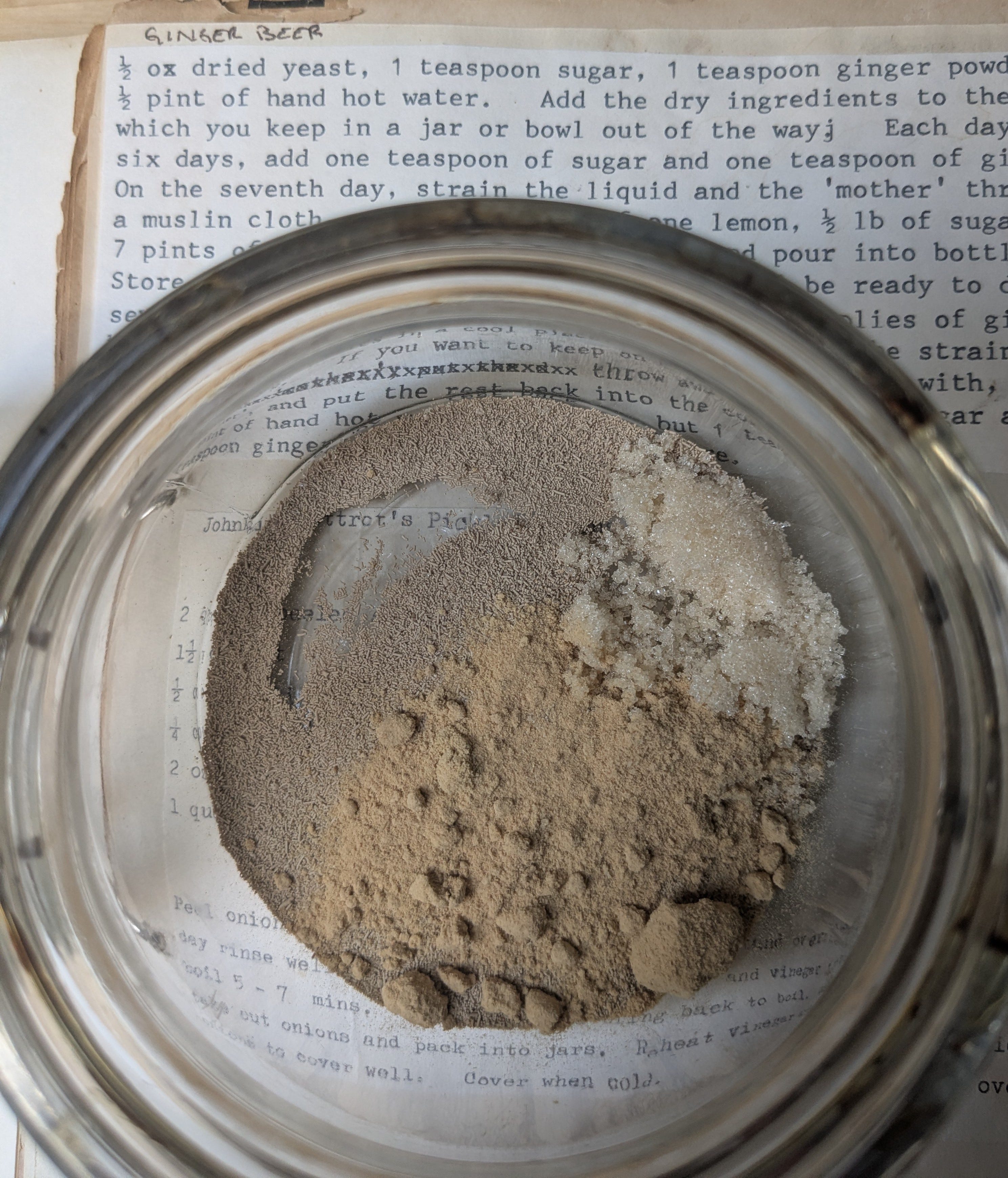
You might be able to discern my mother’s possibly alcoholic recipe under the Kilner jar being set up to process my latest batch. But my sense of responsibility leads me to offer you the non-alcoholic version made from what is called a ‘ginger bug’. I have also made it this way and it’s a whole lot nicer than the ginger beer of my youth. However, drinking the yeasty one takes me with a certain nostalgia right back to that Warring States Period between my sister and me and our mother when we fought over everything.
thick chunk of fresh ginger root about 7-8cms/3 inches long
3+2 tablespoons raw sugar
3¼ cups of tepid spring or mineral water
Mix the water with 3 tablespoon of sugar in a large glass jar and stir until the sugar has dissolved.
Wash and dry the unpeeled ginger root, then grate 3 tablespoons of it and plop it into the jar. Cover it with a cloth or kitchen paper and hold it on with a rubber band. Set aside in a warm dark place and give it a good stir once or twice a day.
After 3 to 7 days it should start to bubble. As soon as it does, feed it 1 tablespoon of sugar and 1 tablespoon of grated ginger on each of the following two days.
Once it is seriously bubbling, strain the mixture through a sieve and a funnel into a bottle you can seal with a cork. Leave around 7-8cms/3 inches clear of liquid at the top. Store in the fridge where it will keep for 2 or 3 weeks. I know I’m striving to give you a non-alcoholic recipe, but this makes a good mixer with gin.
Delightful ramble through history, Julia, thank you! I too went through the Warring States period, not once but twice, first with my mother and sister and then all over again with my daughter. The problem with being strongly opinionated women.
Fascinating and erudite as always. Think you might have left out something on value of ginger in olden times. Even with inflation it was probably worth more than a little over a dollar😉