
Truly taking the biscuit
A recipe for hazelnut shortbread biscotti


When exactly it was that Brits were introduced to cantucci I can’t quite remember. But there was a moment when suddenly you wouldn’t be served a mousse or a fool or even a cappuccino in some posh coffee bars without it being accompanied by one of those double-baked, almond-slivered Italian biscuits that could break your teeth. In Italy much more sensibly, they come served with a small glass of Vin Santo – ‘Holy Wine’, a dessert wine made from dried Malvasia and Trebbiano grapes that have been aged for several years to create a mellow, honey-sweet liqueur. The cantucci are for dipping into it, quite the best way to eat them and a vastly superior Italian take on the English habit of dipping gingernuts and Digestives into a cup of tea.
They might have been new to 20th century Brits, but there’s nothing new in a cantuccio. They go all the way back to 16th century Tuscan bakers. Some would have it they are even older, a version of them popular in Ancient Rome when philosopher Pliny the Elder noted that it was possible their twice-baked precursors might last for centuries without going stale. The Twinkies of their day?

They seem to have fallen out of favour at the time the Roman Empire fell, too. They only re-emerged in Tuscany during the Renaissance, becoming popular in the court of the Medici. They were also appreciated then for their durability, by soldiers and fishermen away from home for extended periods despite them being a pretty dreary unsweetened munch, cane sugar not a common ingredient at the time.
It’s suggested Christopher Columbus might have packed them on his travels. There’s even a legend that a far, far earlier explorer could actually have been responsible for the creation of cantucci – Jason of the Argonauts, that adventurer who sailed to retrieve the Golden Fleece from Colchis. The story has it he commanded his cook to bake bread for their long expedition. Much like Alfred the Great, the 9th century king of Wessex, who, when hiding from the Vikings in a peasant woman’s hut, ignored her instructions to keep an eye on her baking cakes (“Good King Arthur, oh lord sakes, Took forty winks and burnt those cakes”), Jason’s cook fell asleep. When he awoke, he found the Argonauts’ bread order had overcooked, becoming shrunken and dry. Nevertheless, Jason loaded it onto his ship where it fed his grateful sailors for the duration of trip without going off. The only drawback to this lovely tale is that Jason is a mythical figure, so the entire story is fantasy. And no-one can really confirm the King Alfred episode.
Cantucci originated well before 1400 in the Tuscan town of Prato, where the lightly aniseed-flavoured hard biscuits created from sliced and toasted bread dough made the town famous. In 1858, local baker Antonio Mattei added almonds to the dough and founded the company ‘Antonio Mattei Fabbrica di Pane, Paste, Cantucci, Biscotti e altri generi’ (‘e altri generi’ loosely meaning ‘and other stuff’), still in the same location today.
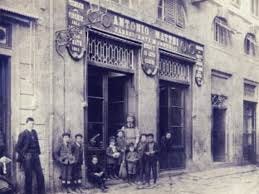
Mattei took his cantucci to the first Italian National Exhibition in Florence in 1861 and was given an award for them. The following year, his Prato almond biscuits received a mention at the London Exhibition and in 1867, he presented them at the Universal Exhibition in Paris. The cumulative recognition put Prato and cantucci firmly on the map.
The point of all this is that you are about to need a supply of cantucci-style biscuits because we’re on the verge of entering the season of those fruits which inspire a cook to create a fool. Yes, a fool is a classic English fruit dessert that goes back almost as far as cantucci - to the 16th century, and one that is incredibly easy to make. (See next week’s Tabled.)
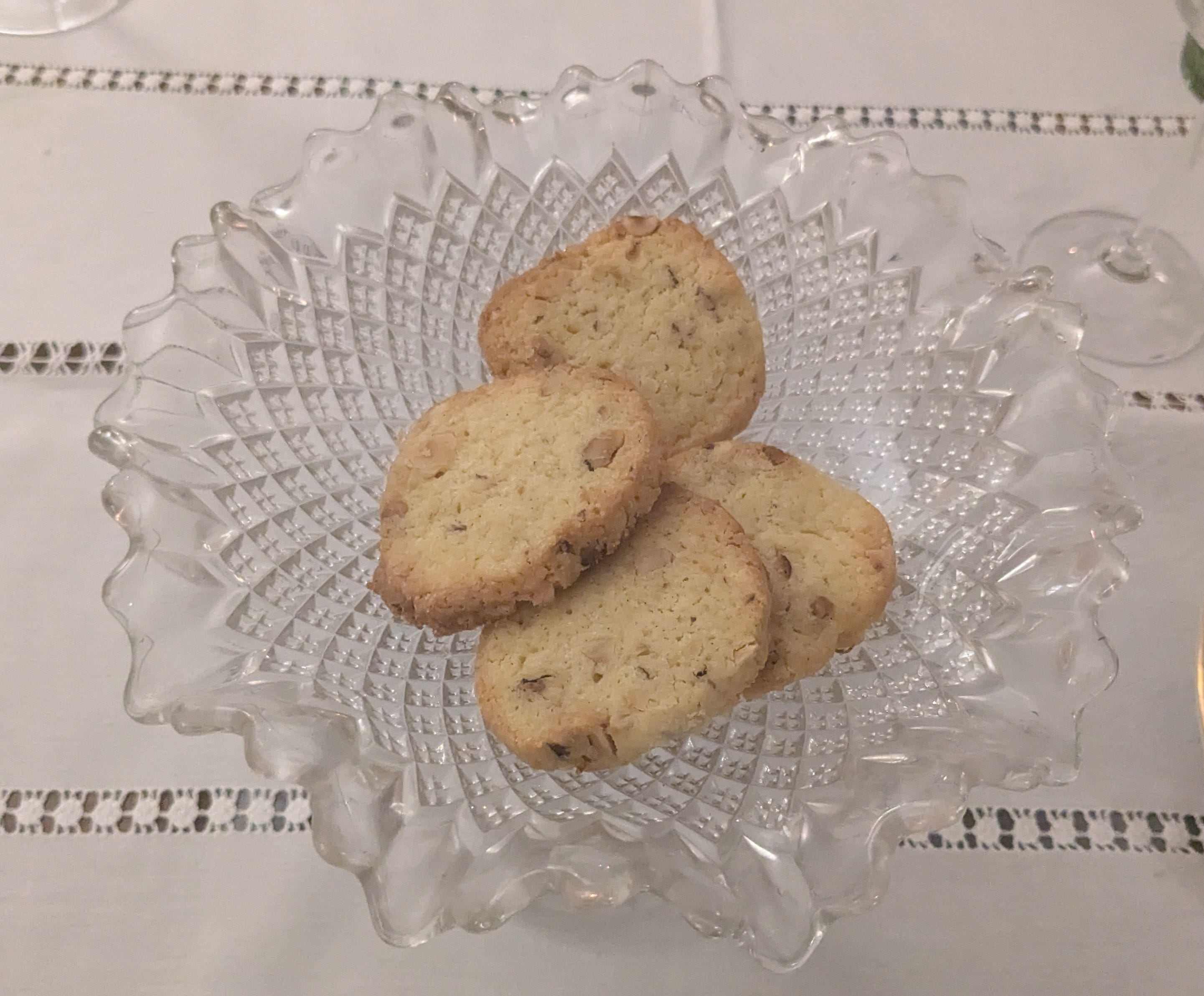
But I’m not going to give you a cantucci recipe. With weather at last summoning me outside, I’ve no inclination to languish in a kitchen cooking a cookie twice over. You can find a cantucci recipe on the internet. This recipe is far more quickly baked and makes a competitor to an Italian cantuccio which is anyway better served with a glass of Vin Santo. There aren’t very many in the photo because I ate most of them. Next week I will give you an incredibly simple recipe for a fruit fool to go with them.
225g/8 oz unsalted butter, softened
130g/4¼ oz golden caster sugar (regular granulated will do)
1 teaspoon vanilla bean paste
½ teaspoon ground cardamom
sea salt, generous pinch
1 egg
225g/8 oz plain flour
100g/3½ oz chopped hazelnuts, toasted
Using an electric whisk, beat the butter, sugar, vanilla bean paste, cardamom and a large pinch of sea salt together until light and fluffy. Add the egg and briefly whisk again to combine. Sift over the flour and add the hazelnuts. Stir to combine into a dough, then with your hands quickly form it into a ball.
Dump the ball onto a large sheet of baking parchment or cling film, using it to help you form it into a sausage shape about 25cm/10 ins long. Roll it up tightly and chill in the fridge for an hour to firm up.
Preheat the oven to 180C/355F.
Slice the chilled dough into generous 1cm/¼ inch-thick rounds and arrange set well apart on the lined baking tray. Bake 12-15 minutes until lightly golden and set, veering, in my experience towards the 15 minutes so they are thoroughly cooked through. Leave to cool on the tray before storing.
You are so right. Cantucci are only good soaked in vin Santo. And as for those hazelnut shortbread biscuits- thrilled to have the recipe- utterly delicious and indeed impossible to not eat the whole lot in one sitting!
I am so happy to have found this wonderful blog. Thank you for posting. This is Jessica Hirschhorn who is living in your former house in Bethesda Maryland on OldChester Road. I would love to send you photos of the garden , our family, and the renovations we have done. I still love everything about this house and we have not changed a single inch of the footprint.