
MSG? Please pass the Parmesan
A recipe for French Onion Soup


One of the many manipulations of the eating public by Big Food Biz is their drive to override the linking of a traditional foodstuff to a specific observance in favour of capitalising on our yearning for it by providing it all year round. Top of the UK treats on my ‘Consumer Control’ list is the Hot Cross Bun. A raisin-filled roll eaten toasted (interior side only) then smothered in butter, these evolved from pagan spring festival buns that Christian medieval monks adopted, adding two strips of plain dough to each glazed top to symbolise the crucifixion of Christ. Their sale was limited exclusively to Easter by Royal Decree in 1592. Now you can buy them any time you wish and have them flavoured not just with their original cinnamon, allspice and nutmeg, but with chocolate chips, apples, Nutella, dried fruit peel and, would you believe, Marmite.
Not willing to buy that particular 4-pack but curious nonetheless, I toasted a regular hot cross bun, buttered it, and dabbed the melted-fat surface with touches of the yeasty black spread. Well, what a revelation! The salt with the sweetness of the raisins? Plus the warmth of the spices? Heaven! But not considered so by enough of the British population for the makers to continue this version. It is a hot cross bun of the past.
There are multitudes out there who will be delighted. But Marmite brings so much more to food than a bone of bitter contention. It’s the secret weapon of many chefs who use it instead of salt to flavour any number of meat dishes and sauces, particularly those cooking vegan and vegetarian menus who want a base-enrichment replacement for anchovy paste.
Its appeal lies in its umami effect. This is produced by the fact that it’s loaded with MSG. Yes, you read this right: monosodium glutamate, that despised and feared ingredient.
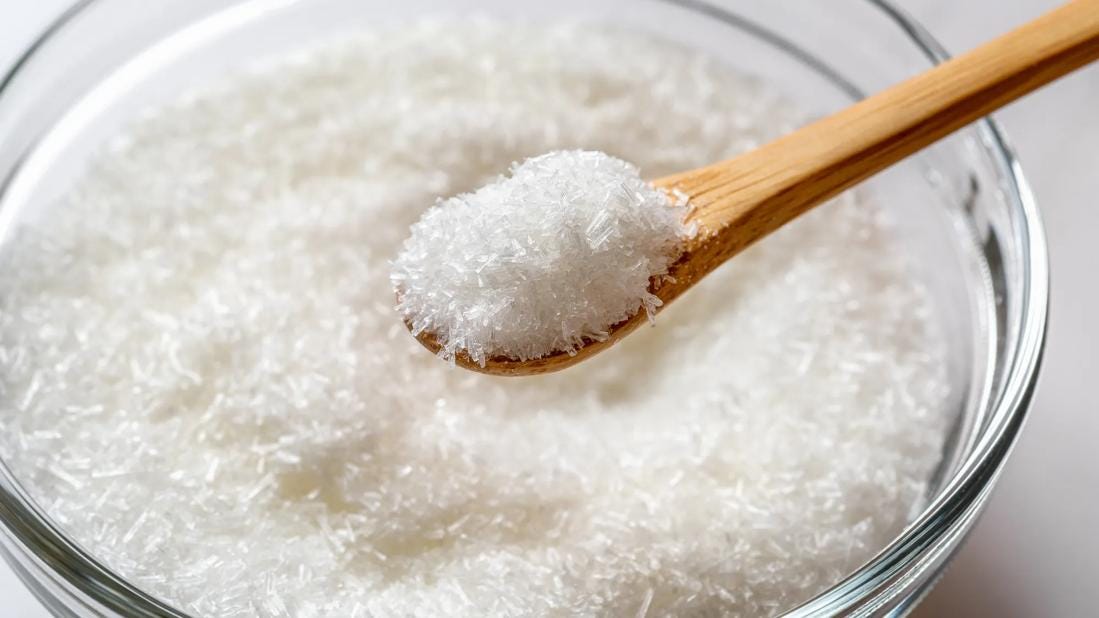
Salt-like MSG fell out of favour in 1968 when Robert Ho Man Kwok, a pediatrician in Maryland, wrote a letter to the New England Journal of Medicine speculating whether he could link the headache, heart palpitations and numbness he experienced after eating Chinese food to MSG. Panic began to build, aided not least by Ralph Nader, the political activist who fought for consumer protection who pushed to ban the ingredient in baby food. He was followed by other activists driving to ban it entirely.
While it’s certainly the case that some people would respond poorly to more than 3 grams of MSG taken without food or water, MSG is never delivered neat. In fact, Americans had been consuming MSG in TV dinners, canned soups and more for decades without experiencing any reason to complain, and even today, perhaps not knowingly, can consume around 500 milligrams daily. Diners in East Asia take in three times more, around 1700 milligrams, without experiencing headache or palpitations. But the 1960s were also a period of the Vietnam war so there is a view that the response to the NEJM letter might have been linked to anti-Asian and Chinese xenophobia already targeting Chinese restaurants as ‘foreign’ or ‘dirty’.
MSG is a glutamate occurring organically in ingredients like tomatoes, mushrooms, and cheese - most particularly Parmesan. The manufactured chemical version is created by sourcing starch from corn, molasses, sugar beet and sugar cane, fermenting its sugars to extract glutamic acid which combined with sodium creates MSG. Organic or man-made, MSG activates our taste receptors and ignites our digestive juices.
It was first extracted in 1908 from seaweed by Kikunae Ikeda, a Japanese chemist and professor at Tokyo Imperial University. He isolated it as the element responsible for the complex and deeply satisfying richness of dashi, a broth made from kombu seaweed and bonito flakes, both of which contain high levels of glutamic acid, responsible for the meaty flavour of umami. Though foodies may not know this about a favourite foodie word, umami is the official classification of the response of our taste receptors to glutamates and nucleotides. These essential natural compounds are also present in fermented foods (hello, Marmite and Japanese soup stock).
What’s betting Big Food Biz doesn’t have phalanxes of scientists who have signed NDAs trying to reproduce them in chemical formulas so they can add umami to everything they manufacture.
Monosodium glutamate has enormous influence on our tastebuds. It’s unlikely molecular gastronomy, popularised in the 1990s by Ferran Adria, then Heston Blumenthal and others, would have had the same impact without its open use of MSG. In 2012, chef David Chang, American founder of the Momofuku restaurant group, spoke out in support of MSG at the MAD Symposium in Denmark, an annual conference in Copenhagen bringing together food professionals to discuss issues facing the food industry. As recently as that year, he linked attitudes still rejecting the use of MSG to anti-Asian bias. Even to this day, those three initials instil fear in many diners who may bandy the word umami about with relish.
2026 could be the year all that changes. Honest Umami, a range of MSG-based seasonings, is on the market. “We’re ‘honest’ about the fact that all umami flavour in every food essentially comes from MSG,” says its co-founder Rob Miller, who is selling one plain and three seasoned MSG powders in pinch pots. I’m not an Influencer so not paid to mention their name. Nor am I convinced their decision to give the packaging the kind of Asian design generally associated with the pot noodle is the way to break down barriers. But I’m looking forward to keeping the pure MSG pot openly on the counter instead of furtively digging into my large sack bought from a Chinese supermarket.
What I find interesting in the whole issue is how we consumers are curious enough about other cultures’ cuisines to try out unfamiliar dishes. Yet we are still resistant to much of what creates them. We’ll guzzle our bao because they’re basically exotic burgers formed from a squishier bun. We’ll twirl our garlic-and-chilli oil noodles because they’re just spicy pasta. But suggest, in these controversial, climate-affecting intensive meat-production days, a cross over to consuming our protein via insects? Oh, yuck! Yet what is the physical difference between a cockroach and a prawn? And anyway, isn’t any critter in soy, garlic and ginger or a chilli salsa going to taste the same? I remember munching with relish tacos de chapulines, grasshopper tacos, at Jose Andres’ Washington DC restaurant, Oyamel, and a newspaper cornet of stir-fried cockroaches passed through the window of a bus in Cambodia by a woman with a woven tray of them on her head.
One of the most umami-rich vegetables is the onion. Cooking them very slowly to caramelise them breaks down their proteins and releases their natural glutamates. These winter chill days, what could be more comforting than a steaming bowl of French onion soup. That’s the one with a lid of melted cheese-on-toast. If you don’t like the wodgy effect that comes from floating toast in broth, then serve the cheese-on-toasts separately.
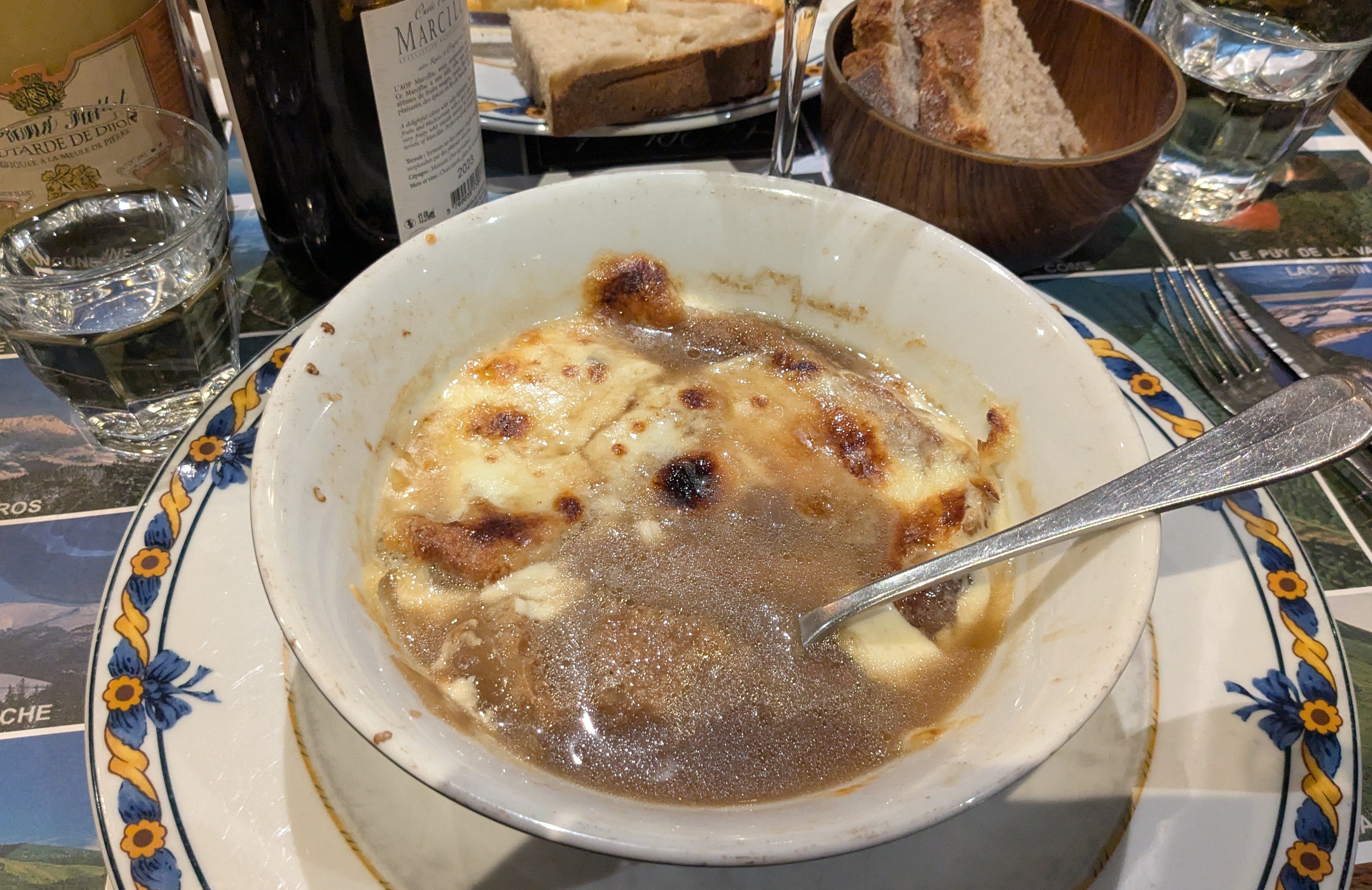
This is the French Onion Soup I slurped this week in Paris in a snowstorm. Being English, I’ve been trained that boasting is the despicable behaviour of the vain. But my own French Onion Soup is a good deal more sumptuous. You be the judge.
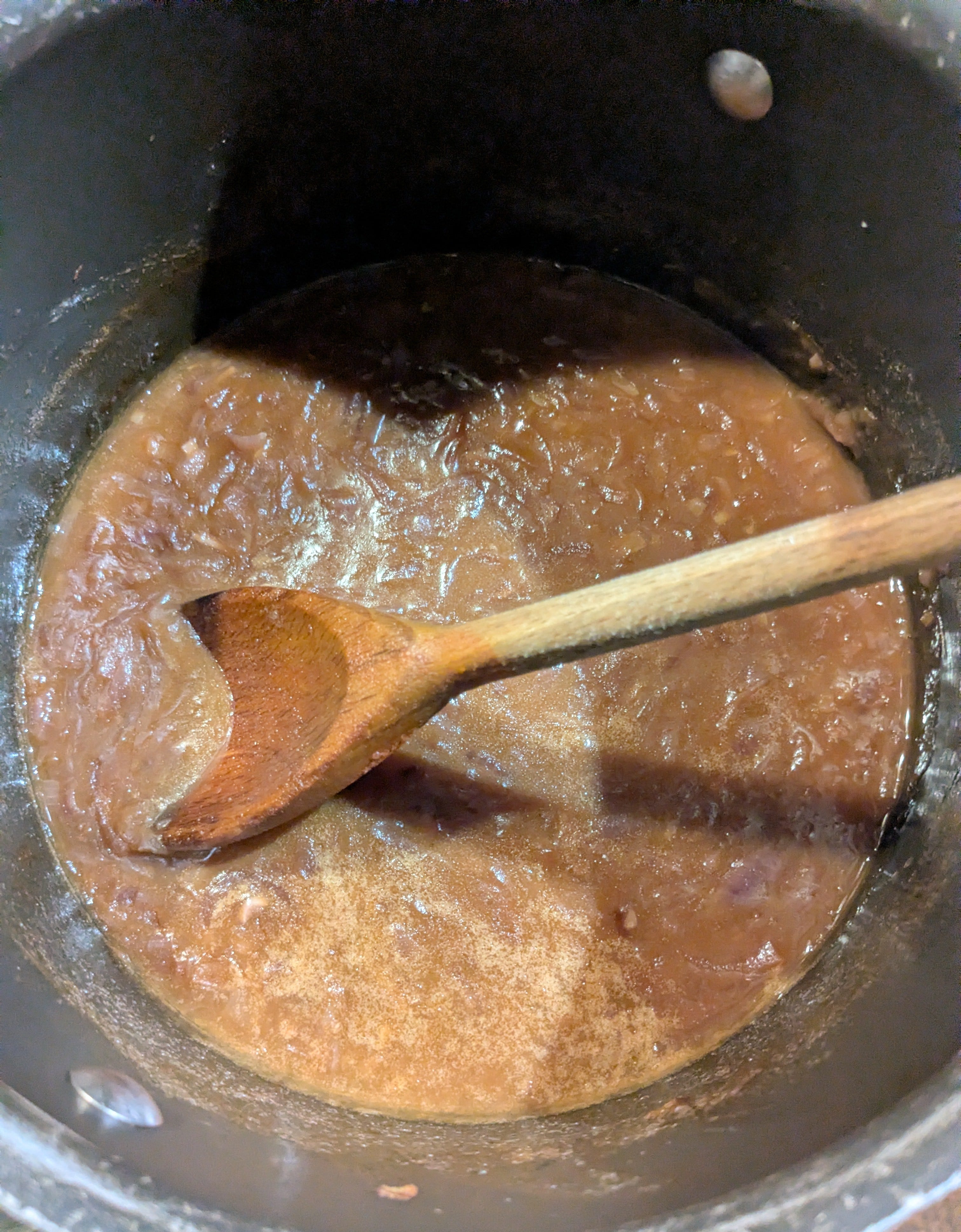
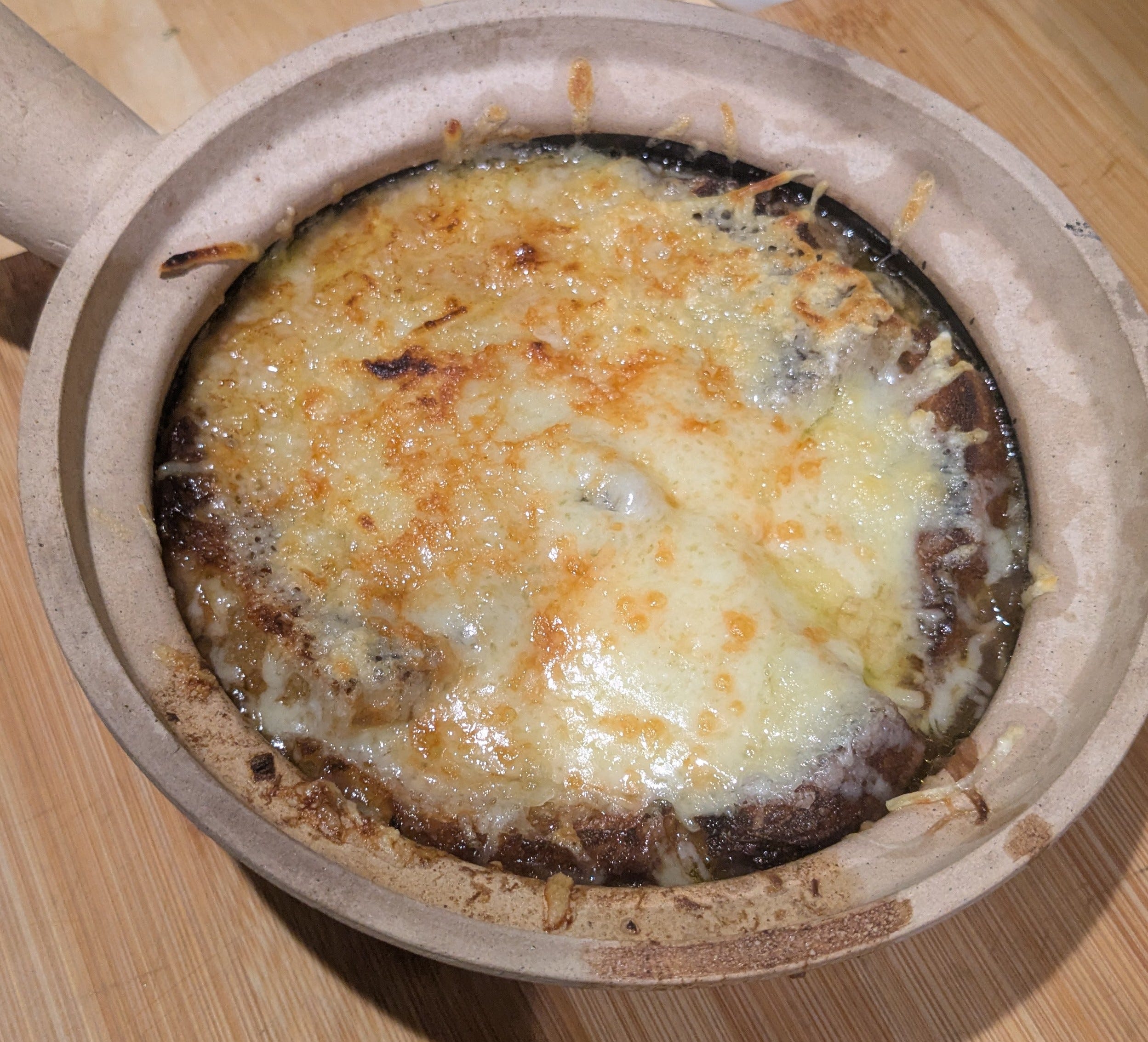
Serves 4
1½ lbs onions, thinly sliced. The French use yellow. I used red because they’re what I had
3 tablespoons butter
1 tablespoon olive oil
1 teaspoon salt
½-1 teaspoon sugar to taste, but take care - melted onions are sweet
1½ tablespoons flour
2 pints or more to taste beef or vegetable broth
½ cup dry white wine
3 tablespoons cognac
French bread, sliced in 2.5cm/1 inch-thick slices
2 cups grated Gruyère cheese
Pour the oil into a large pan, add the butter and set over medium heat until the butter has melted then add the onions. Stir, lower the heat, cover, and cook slowly for 15 minutes, stirring a couple of times.
Remove the cover, stir in the salt and sugar, and cook gently until the onions have turned deep brown, stirring regularly. If they begin to catch, stir in a tablespoon of water and scrape up. Sprinkle over then stir in the flour. Cook out the flour, stirring once or twice for 2-3 minutes. (Yes, a lot of stirring in this recipe.)
Meanwhile, in a separate pan, bring the stock to the boil then slowly pour the broth into the onions, briskly stirring to loosen any caramel or onion caught on the bottom of the pan. Add the wine and simmer the soup for 30 minutes, then add the cognac.
Toast the bread (and butter it for sumptuousness if you’ve a mind). Reheat the soup to boiling then pour into individual bowls. Lay the toast on top of each bowl and thickly scatter the cheese over all. Slide the bowls under a hot grill or broiler to brown the cheese. Serve bubbling.
It must be said that the soup improves even more for being refrigerated overnight.
I actually discovered an msg sensitivity last year and I'm so pissed off! If it's used like salt I don't have any problems, but if it's chucked in by the handful to disguise a lack of flavour I get itching and hives within about an hour. I've learned to guzzle at least 2l of water to flush it out, and I'm always fine by morning, but as someone who's spent her life telling people about the great msg racism lie it really irks me that I'm actually sensitive to the stuff. Stupid ironic universe. 🙈
Fascinating. I knew none of this.