
It's not burnt! It's 'blackened'
A recipe for Blackened Spatchcock Chicken

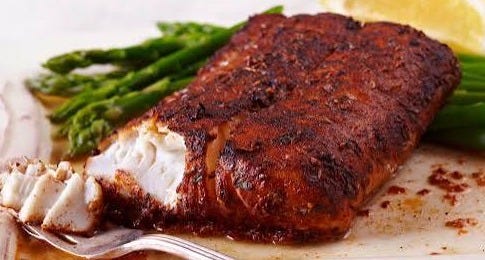
Some years before I arrived in the US, a cooking craze exploded, devised in the New Orleans restaurant kitchen of Cajun chef Paul Prudhomme. He called the method “blackening”. My family, uncouth bunch that they are, called it “burning”, as in “Mum’s burnt the toast again.” I do that on purpose: it renders my deliberately carbonised slice slathered in chilled butter and Marmite celestially delicious.
Paul Prudhomme also did it on purpose, the blackening not the carbonising. He soused first fish then, following the success of the fish, meat and chicken in melted butter and coated it in a proprietary (as I think it’s called, though that usually signals ‘lawsuit alert’) blend of spices before searing whatever it was in a blisteringly-hot, cast-iron pan to create a charred crust full of flavour. Prudhomme's blend wasn’t actually secret, unlike the legally protected KFC and CocaCola recipes. It openly listed garlic powder, onion powder, dried thyme and dried oregano, the first two of which ingredients would horrify a Mediterranean home cook, paprika, cayenne, and black pepper. You didn’t have to put those together yourself, you just had to grab a pot off the supermarket shelf where as soon as the craze became one, supplies quickly found a permanent niche.
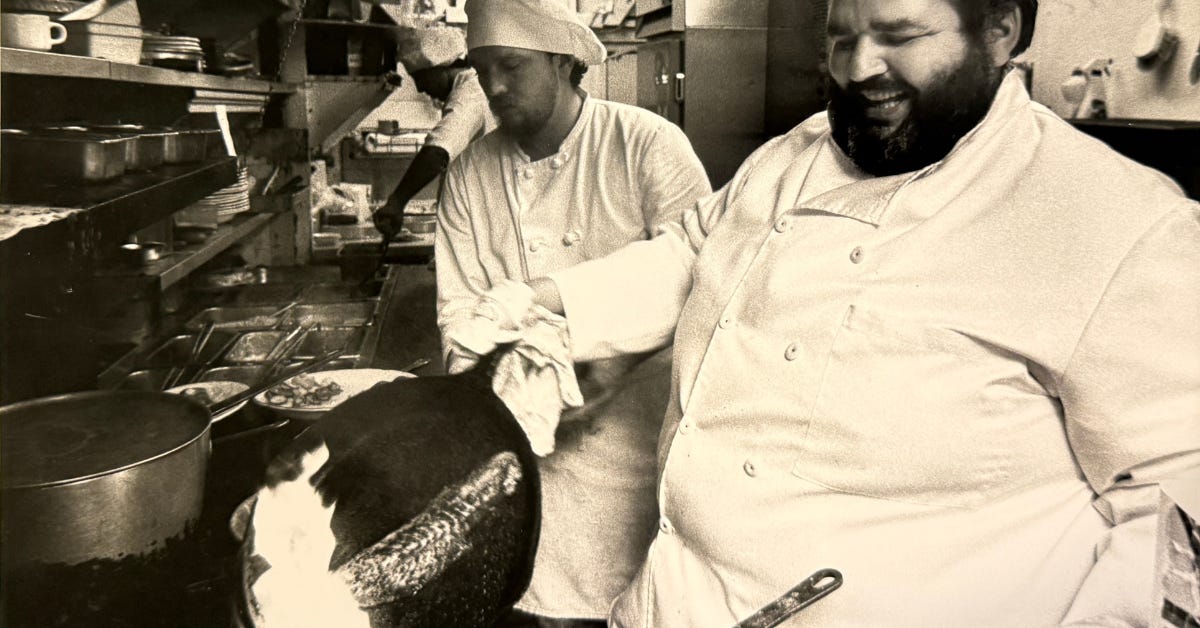
’Blackening’ is a great fall-back descriptive, in my view: you can burn something and present it as deliberate. Just so long as you had remembered to spice it up first. Of course, I do realise that ‘blackened’ only means burned in my kitchen, not in that of Prudhomme’s K-Paul’s Louisiana Kitchen (the ‘K’ in the restaurant’s name for Kay Hinrichs, Paul Prudhomme’s second wife), and all those others which jumped on the bandwagon.
The process nearly drove the Louisiana redfish to extinction, since it was ‘Blackened Redfish’ that was the star dish which took the US by storm. Diner demand for what had previously been considered a ‘trash fish’ led to such overfishing in the Gulf of Mexico (sorry, the Gulf of America) that catch limits had swiftly to be imposed to allow the species to recover. Salmon and catfish and various drum fish stood in for the original. ‘Blackening’ also caused a surge in sales of the cast-iron skillet, a lovely thing to own. Are we sheep, or are we sheep?
The story behind the method is that Chef Prudhomme, a man of Pavarotti proportions, was looking to recreate the flavour of the foods he and his twelve siblings were cooked by their mother on family camping trips. She would lay spice-coated fresh-caught fish onto a screamingly hot black iron pan over an open fire, trapping the flavour of smoke in their crispy crust. If I had given birth to thirteen children I might have been inclined to swing the screamingly hot black iron pan at their father’s head.
It wasn’t the fish’s flesh which blackened but the spices. They sealed in the tenderness of the fish, much in the way that the British batter coating on the fried fish of Fish & Chips was originally created to steam a fillet hitting boiling fat inside its protective casing that was intended to be discarded by the diner - until they discovered just how delicious the crispy coat could taste when soused in malt vinegar, salt, and, later on, ketchup.
The melted butter in which a fish to be blackened is slathered glues the spice mix to the flesh. When cast into the dry 260C/500F-and-higher skillet, it at once vaporises, immediately charring and caramelising the spice mix into a crust full of flavour.
Prudhomme was known as both a Cajun and a Creole chef. ‘Cajun’ is a mispronunciation of ‘Acadian’, an American ethnic group descended from French and Spanish 18th colonists from eastern Canada who were expelled by the British and settled in the Louisiana bayous, blending into established Native American and West African cultures. Cajun cuisine is rustic, rich and heavily seasoned, starring Gumbos and Jambalayas and Étouffées, thickly sauced one-pot comfort foods. Louisiana ‘Creole’ cooking is considered a more refined ‘city’ cuisine. Often containing okra, tomatoes and rice, three ingredients considered pillars of Creole cuisine, much of it came from similar origins, its sauces roux-based or thickened by the presence of the okra. Sliced okra releases mucilage, a gluey soluble dietary fibre that delivers a velvet richness.
I’m not sure Chef Prudhomme would have agreed, but I sort of see a connection between Louisiana blackening techniques and those applied in Middle Eastern and South Asian cuisine. It’s common in the Middle East to brush fish or chicken with a spiced-up oil much like the Cajun melted butter treatment, before searing it over live, blistering fire. In India, a masala paste of ginger, garlic and cilantro, mint, green chilies and cumin, turmeric, red chili powder and a smidgin of tamarind or vinegar for sourness, is smeared over fish like pomfret before quickly frying it to blackness.
The prime difference lies in the spices. In the Middle East, cumin ground and whole, cardamom, cloves, cinnamon and chilli are added to the paprika, garlic and black pepper base of Louisiana. Just as Chef Prudhomme’s blackening mix is sold in a single pot, so does Baharat Spice Blend from a Middle Eastern market short-cut creating the spice mix at home. Typically, baharat contains finely ground black pepper, paprika, cumin, coriander, cinnamon, cloves, nutmeg, and cardamom, and sometimes loomis - dried limes.
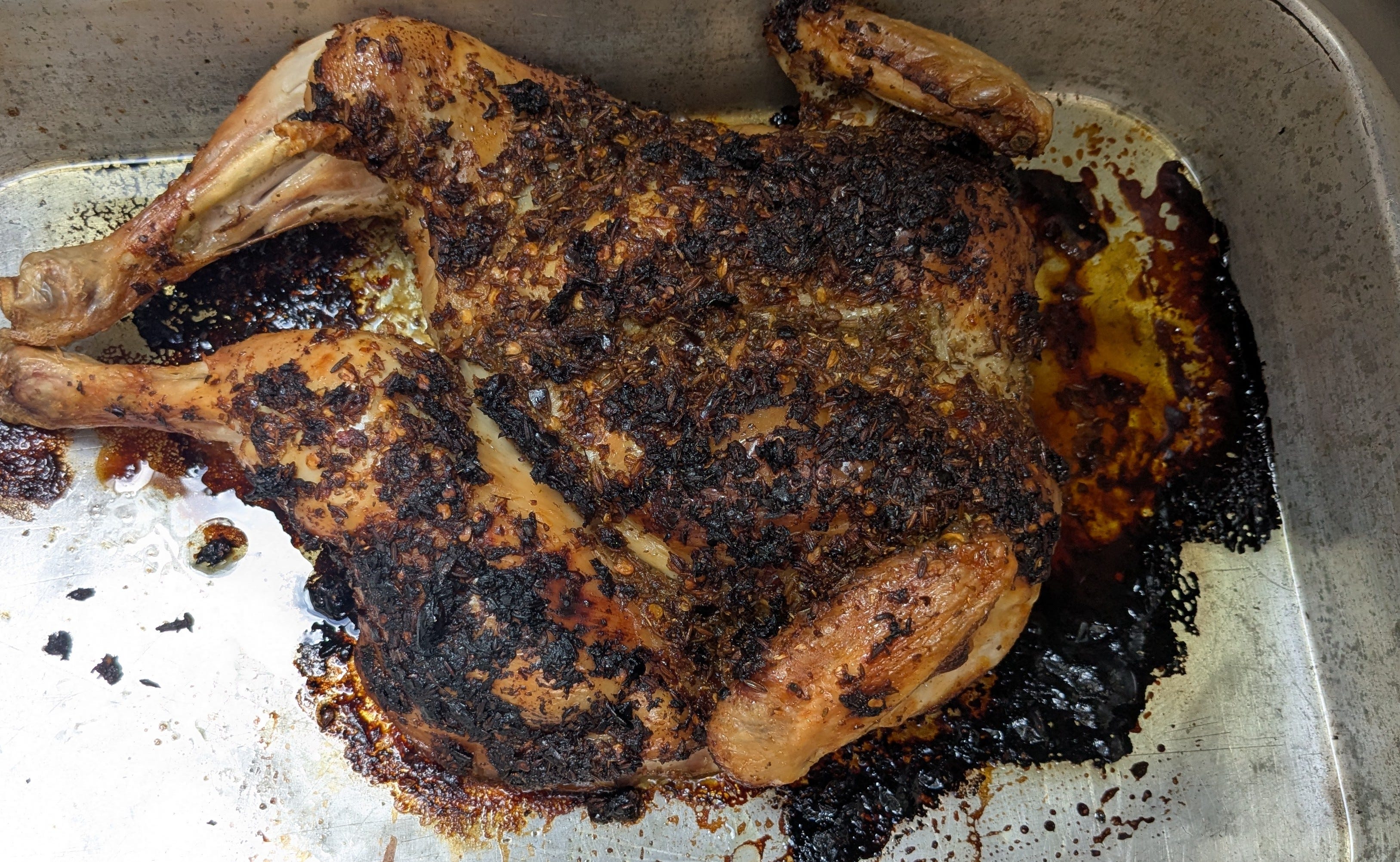
If you have your barbecue going at some point during the summer, this recipe from the wonderful Persian chef Sabrina Ghayour’s Feasts, is something other than the usual fare to grill on it: blackened chicken. Equally, you can make it indoors in an oven. You don’t have to follow the spice ingredients precisely - use what you have to hand of Louisiana and Middle East and Indian spices. But follow the technique.
The chicken is spatchcocked. Your butcher will happily do this for you but honestly it’s a doddle, quick and supremely satisfying. You simply lay your whole chicken, breast down, the parson’s nose away from you, on a board. Slice off the parson’s nose and discard or save with the eventual carcass for stock. With the point of a sharp knife make a small slit into the flesh on either side of the spine. Then push the knife into one of those incisions, bringing the knife towards you and slicing easily through the thin bones. Repeat on the other side. So easily you’ve cut away the spine. Turn the chicken over breast-side up and press sharply down on it with the flat of your hand to squash it open. Job done.
Serves 4
1.5kg/3⅓ lb chicken
1 tablespoon cumin seeds, toasted in a dry pan till they jump
2 teaspoons ground coriander and the same of ground cumin
seeds from 6 green cardamom pods finely crushed in a mortar with a pestle
1 tablespoon mild and fruity pul biber chilli flakes or ½ tablespoon if using regular red pepper flakes
1 tablespoon dried thyme
grated zest of 1 unwaxed lemon
2 garlic cloves, peeled and grated
1 heaped tablespoon caster or superfine sugar
3-4 tablespoons olive oil
sea salt flakes and freshly ground black pepper
Make the spice paste by mixing together all the ingredients except the chicken then massaging it into the splayed chicken all over its skin. Cover in film and leave to marinate at least 30 minutes but preferably overnight.
Preheat the oven to 230C/445F.
Line a baking pan with parchment paper and lay the chicken, skin side up upon it. Roast for 45 minutes or until cooked through, the skin blackened and crisp. Leave to rest 10 minutes before serving. If you’re roasting it on the barbecue, place it to the side over indirect heat and cook for a similar time.
It goes equally well with western salads and side dishes as with Middle Eastern ones.
Historical & Culinary Links:
The New Orleans Invention: Blackening was created by Chef Paul Prudhomme in the 1980s at [K-Paul’s Louisiana Kitchen](0.5.2, 0.5.8) to replicate the flavors of outdoor charcoal grilling indoors. [1]
The Shared Spice Profile: Both Cajun blackened seasoning and Middle Eastern spice blends (like [Baharat](1.3.1, 1.3.3)) rely heavily on paprika, garlic, black pepper, and cumin. The primary difference is that Middle Eastern blends add warming, sweet spices like cinnamon, cloves, and cardamom, while Cajun mixes lean into cayenne and oregano for heat. [1, 2]
The Cooking Method: Both traditions use a smoking-hot skillet to quickly toast the spices and caramelize the meat. For Louisiana-style blackening, the protein is dipped in melted butter first; Middle Eastern variations usually brush the meat with spiced olive oil. [1, 2, 3, 4, 5, 6]
If you’re interested in exploring these flavors further, I can:
Provide a step-by-step recipe for traditional Louisiana Blackened Chicken
Walk you through making a Middle Eastern Baharat spice blend from scratch
Share tips on the best cast-iron cooking techniques for getting that perfect char without burning
My son is home from college before law school and blackening stuff left and right. And my wife is burning candles with the same ferocity. I keep reminding him that he ought to try this outside on the gas grill - I don’t think he is going to hurt the cast iron. Never have tried it, though it is next up. Enjoyed this article immensely, brings back my best memory of New Orleans.
I am so endlessly enlightened and entertained reading your histories!