
Fungal Matters: fungi matter
A recipe for Roasted King Oyster Mushrooms


“Nature or nurture?” is an intriguing question if you apply it to the foods we dislike. There was a lightbulb moment long after I had left home when my father revealed he didn’t like apples. Good heavens, I thought! I can’t be bothered with them either! I love a Tarte Tatin and a crumble, and what better fruit-and-meat marriage is there than pork belly slowly softening on a bed of apples, onions and wine while its skin crackles up? Yet I’ve never experienced much joy from sinking my teeth into the raw fruit.
I didn’t need a light bulb moment for green peppers. I’ve always despised them. Why not wait for them to ripen to red when I will eat them happily? But my mother hated green peppers and regularly said so. Is that why I pick them out of any dish I haven't cooked myself?
Away from parental influence, I’m ambivalent about mushrooms, although I grew up with my apple-loathing father regularly making mushrooms-on-toast for supper. He’d fry them in butter with lashings of black pepper and pile them onto thick slices of grilled malted granary thick with cold butter, to be eaten on the knees in front of the telly. They were just what was wanted on Sunday evenings after we’d tucked into a massive roast only a few hours earlier, particularly if the Eurovision Song Contest he was passionate about was on.
Still, in other presentations I find them a bit slithery, a bit fusty in a dirty laundry way, a bit shifty. Yet I scoffed mushrooms by the poundage when I lived in Moscow. The gribi v’smetane I ate - mushrooms in sour cream - were cooked by Valentina, our beloved and courageous Siberian babushka. Foisted on us by the KGB to look after us and into what we were up to, she reported back the very bare minimum.

The first time she made it was after I’d gone in search of a human interest story for my voracious editor on a low news day. I’d sneaked into the furtive forest world of mushroom hunters, shuffling between the trees on the trail of invisible pickers who would have attacked me physically if I’d stepped into their secret glade. I found none, neither hunter nor mushroom. So stopped at the farmers market and paid over the odds for face-saving golden chanterelles.
Russians cook all varieties of mushroom with smetana (sour cream), and sometimes fresh dill, into a thick stew that is mopped up with copious slices of dark Russian bread.
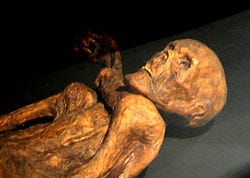
The Russians - and eastern Europeans, French and Italians - are far from the earliest mushroom foragers. Archaeologists have found evidence fungi were gathered for food and medicine and the plaster-hard fungi growing like Elizabethan ruffs round tree trunks for use as fire starters. Tyrolean iceman Ötzi, who lived between 3350 and 3105 BC, was carrying tree fungus when he was murdered, possibly for his tinder. (Isn’t the breadth of archaeological knowledge astonishing? Perhaps archaeologists and not the police should be put in charge of solving current cold cases.)
The Ancient Egyptians reserved mushrooms exclusively for their pharaohs, believing they conferred immortality. While both the Romans and Greeks valued porcini and truffles, the Greeks fed mushrooms to their warriors to increase their physical strength in battle. In Mesoamerican cultures (and swathes of the Swinging Sixties generation), the Aztecs and Mayans used psychedelic mushrooms in spiritual ceremonies.
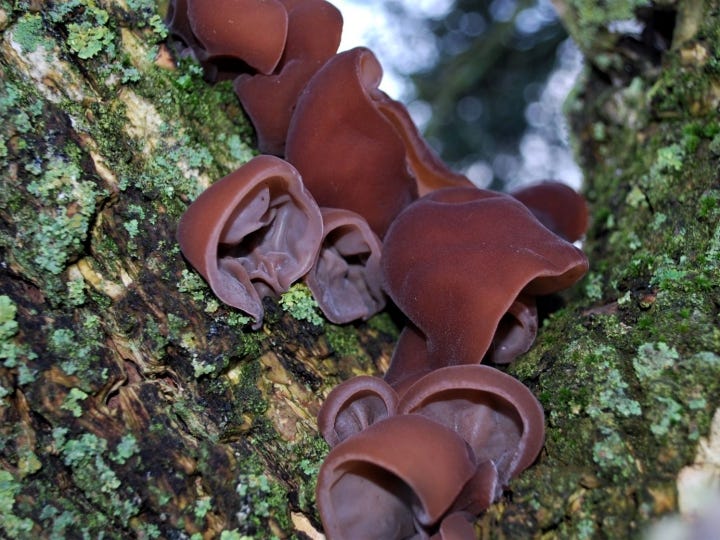
While ancient Chinese texts show the Chinese foraged for wild mushrooms for food and medicine long before 600 BC, formal mushroom cultivation began around then during the Tang Dynasty, with wood ear or black fungus grown on wood logs.
The first time mushrooms were referred to as a crop was in 1600, by French agriculturist Olivier de Serres in Theatre d’Agriculture des Champs. We were all (well, me, anyway) excited last autumn by reports of just how important in connecting plant root systems and therefore soil integrity and environmental preservation is the role of fungal hyphae, the threadlike structures that form mycelium from which mushrooms emerge allowing them to share water, carbon, and nutrients.
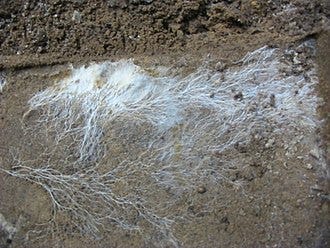
So, it’s a shock to discover that botanist and pioneering French physician Nicolas Marchant had already established a key aspect of the role of those hyphae back in 1678. He gave a demonstration to the Académie Royale des Sciences showing that the “white filaments, which develop in the soil under mushrooms will, if transplanted into a suitable medium, give rise to more mushrooms.”
It was his discovery that inspired the market gardeners of Paris to plunge into mushroom cultivation. By the 16th century, the French were growing button mushrooms in caves and quarries around Paris in such quantities the resulting fungi have ever since been known as Paris mushrooms. Quickly, mushrooms began to proliferate in the kitchens of the court and grand houses, and, once the gardeners of London followed suite, appeared in the fashionable dishes of London society.
The ubiquitous white button mushroom of every supermarket chain grew by chance, from the natural mutation of a light brown Paris-type mushroom found in 1925 in a commercial farm in Coatesville, Pennsylvania, which was then developed.
When I left Russia, I left mushrooms. I wasn’t much moved by porcini. Finding penny buns, as they’re known in Britain, when foraging in forests on the Isle of Mull, it was glee I felt rather than greed. Truffles don’t particularly move me - except for the Italian white truffles copiously shaved over tagliatelle at Washington DC’s Cafe Milano.
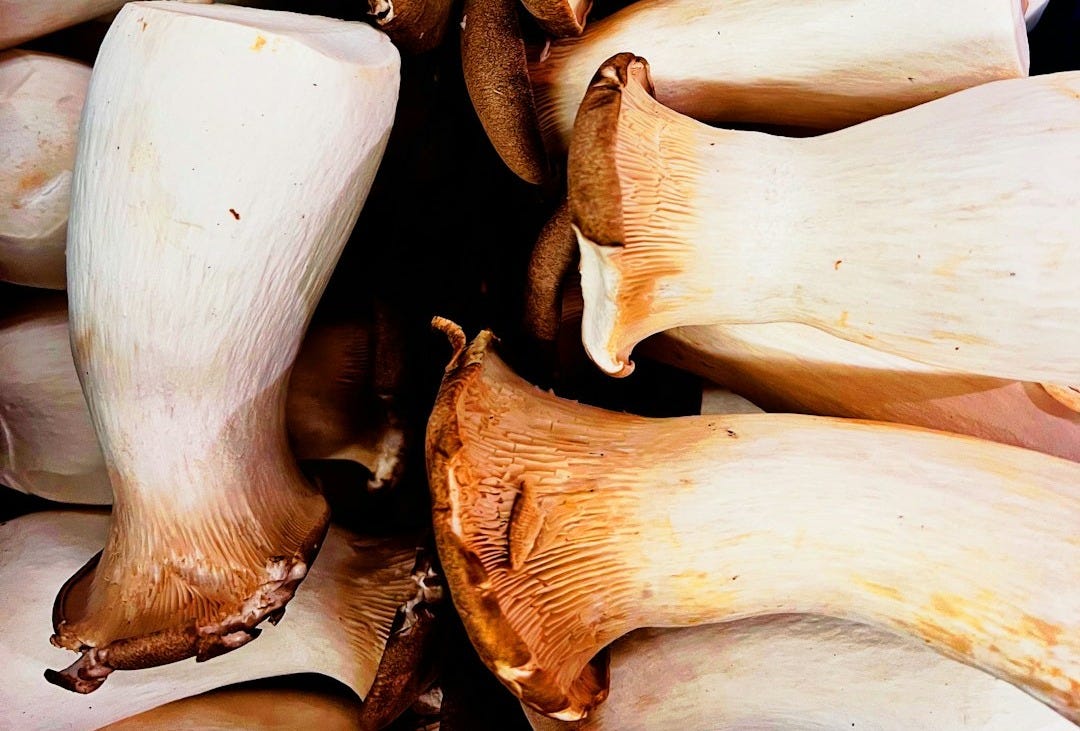
But I‘ve just discovered King Oyster mushrooms. For anyone renouncing meat for vegetarianism, these deliver an earthy, savoury, Marmite-y (no, honestly, don’t sniff) flavour and a chewy texture not unlike that of a veal chop.
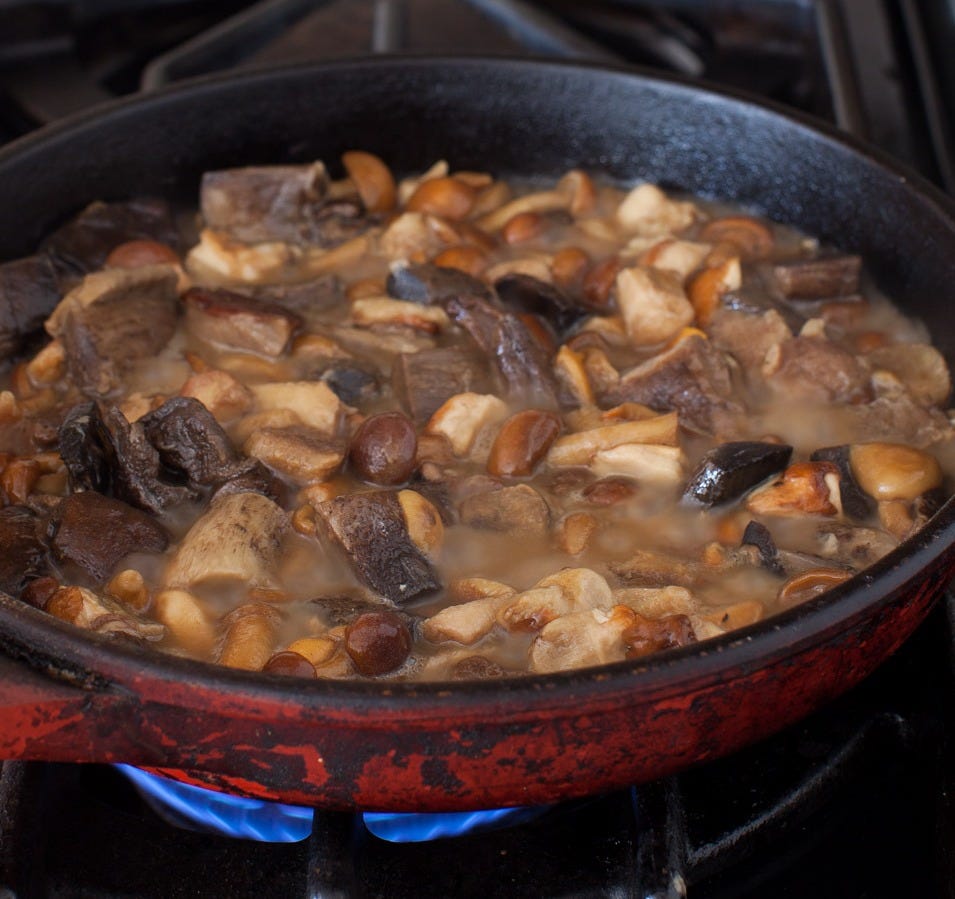
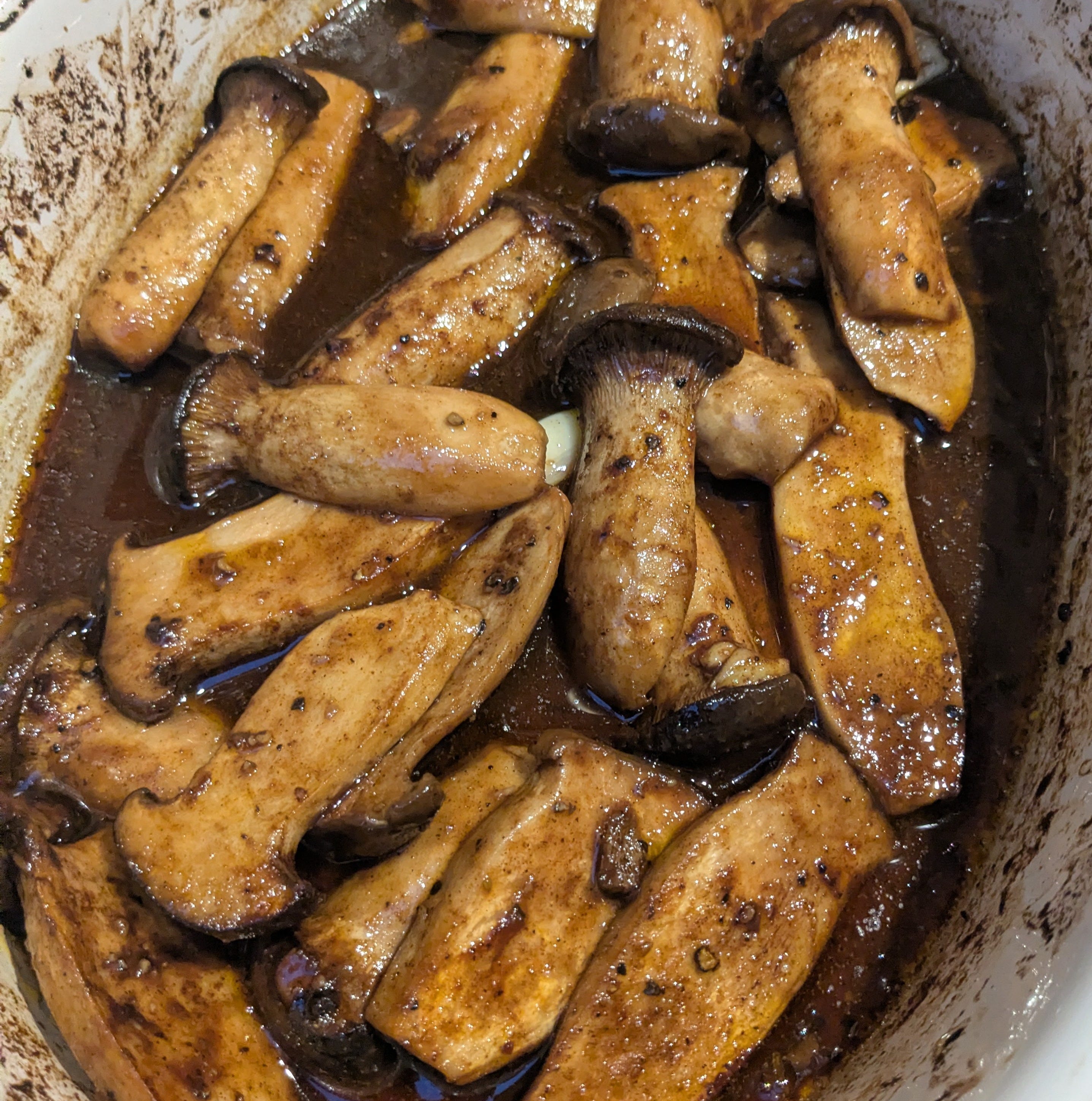
The cooking photo, taken before I’d tizzied up the dish for serving and forgot to record its more beauteous version, doesn’t look like much. But check out the list of ingredients and you’ll see it delivers flavour. Adapted in part from an Ottolenghi recipe, it makes a substantial dish when eaten with sticky rice, or a pork roast or roast chicken. Or the recipe in next week’s Tabled for my mother’s cheat Chinese Spare Ribs.
500g/1 lb oyster mushrooms, sliced in two or three lengthways
salt and freshly ground black pepper
90ml/3 fl oz soy sauce
120ml/4 fl oz olive oil
3 tablespoon tomato paste
60ml/2 fl oz maple syrup
4 garlic cloves, peeled and crushed
1 teaspoon ground cinnamon
1 teaspoon five spice powder
½ teaspoon toasted and ground cumin
½ teaspoon ground fennel seeds
Preheat the oven to 240C/475F.
Pack all the roast mushroom ingredients TIGHTLY in a baking dish or tray. Season with a quarter-teaspoon of salt and more black pepper than you think reasonable – 20-30 grinds. Toss everything well to coat, then roast for 15 minutes.
Stir the mushrooms thoroughly then return them to the oven for another 15-20 minutes or until golden brown when they will be ready to serve.
.
I’m a mushroom lover from way back. Not truffles - generally over-used - but most others. I mean, morelles, porcini, etc., etc.
Hallo Julia,
Simply reading the recipe this week made my mouth water. I’ll be buying king oysters on my next market visit. The story is very interesting. I love the history of food.